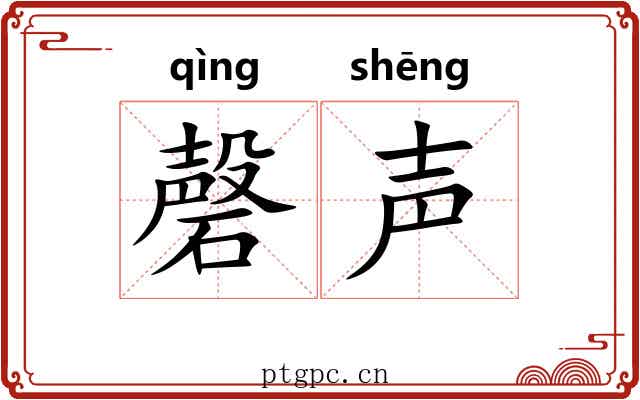
支持模糊查询,支持通配符和拼音查询, 帮助 。
击磬的声音。
指代将帅。
引《礼记·乐记》:“君子听磬声,则思死封疆之臣。”
引《宋书·索虏传》:“是以分命吾等磬声之臣,助 难当 报復。”
["①物体振动时所产生的能引起听觉的波。如 ~音。~带。②消息,音讯。如 ~息。不通~气。③说出来让人知道,扬言,宣称。如 ~明。~辩(公开辩白)。~泪俱下。~嘶力竭。④名誉。如 名~。⑤音乐歌舞。如 ~伎(女乐,古代的歌姬舞女)。~色。"]详细解释
["①古代打击乐器,形状像曲尺,用玉、石制成,可悬挂。②佛寺中使用的一种钵状物,用铜铁铸成,既可作念经时的打击乐器,亦可敲响集合寺众。③缢杀:“公族其有死罪,则~于甸人”。④古同“罄”,空,尽。"]详细解释
tūn shēng yǐn qì
yā què wú shēng
yǐn hèn tūn shēng
wū wū shēng
zhī zhī shēng
cǐ shí wú shēng shèng yǒu shēng
cū shēng cū qì
kuà shēng sù fēi xíng
fàng shēng
mò bù zuò shēng
kēng shēng
shēng xiăng
qìng sè
shēng chuán
xī shēng
shēng niǔ
zhōng qìng
hé shēng
shēng ǒu
hěn shēng
sōng shēng
shēng yǐn
wǔ shēng
shēng tài
sòng shēng
hān shēng rú léi
shēng yù
wén wù shēng míng
shēng shē
shēng líng
sòng qìng
yù shēng diào shì
bù shì shēng zhāng
chāo shēng jié yá
zài dào yuàn shēng